A survey of Software developers finds very narrow focus in what motivates. Even the most hardened veteran still gets tingles when building something new and learning.
If you haven't read 'Drive' by Daniel Pink yet, you should get on that. His insights are very true for us software people. Just a fantastic book. If you are feeling unmotivated by your decent paying job, get this book for some possible explanations.
Bottom line, it's very cool to build stuff. Along that vein, I've been visiting this blog a lot in the past few days. It seems to be written directly for me. I'm a shutterbug, a product review addict, and software professional (which they seem to have a requirement for).
I found a job listing on the site and it sounds like a wicked cool place to work. Lots of building stuff, very few meetings.
But the most interesting part isn't the description of themselves in the job listing, but their use of coding challenge to evaluate new candidates. It doesn't appear to be one of those high pressure 'code while we watch' type deals. Rather, you download the challenge data and produce a solution. Email them a link and your resume when you're done.
I might just do that.
Showing posts with label Fun. Show all posts
Showing posts with label Fun. Show all posts
May 14, 2011
Jan 14, 2011
Jan 1, 2011
State Machine for embedded systems
This is a bit of a trip in the way-back machine for me. I programmed a bunch of embedded off-highway vehicle controllers using C back in the day.
Most of these systems were based on finite state machines. The goal of the programmer is to contain the machine behaviour into a finite set of behaviours based on state history and present inputs.
The hardest part was tracking down bugs which essentially turned Finite State Machines into Infinite State Machines. Global state variables and monolithic switch statements are notoriously easy to turn into spaghetti this way.
The best implementation for state machine I've seen was handed to me for maintenance when I was a junior. I remember it was wicked hard to understand at first. I gummed my first one up because I did not understand all the beauty that it brought.
Once you get over an innate fear of function pointers, it really is a great and simple state machine implementation. BTW, function pointers used this way are much safer than data pointers because the function pointers are never assigned and cannot be null.
Break this thing into several files when your state machine grows.
Most of these systems were based on finite state machines. The goal of the programmer is to contain the machine behaviour into a finite set of behaviours based on state history and present inputs.
The hardest part was tracking down bugs which essentially turned Finite State Machines into Infinite State Machines. Global state variables and monolithic switch statements are notoriously easy to turn into spaghetti this way.
The best implementation for state machine I've seen was handed to me for maintenance when I was a junior. I remember it was wicked hard to understand at first. I gummed my first one up because I did not understand all the beauty that it brought.
Once you get over an innate fear of function pointers, it really is a great and simple state machine implementation. BTW, function pointers used this way are much safer than data pointers because the function pointers are never assigned and cannot be null.
Break this thing into several files when your state machine grows.
// I know this first include isn't very embedded. I need it for Sleeping
#include "windows.h"
#include "stdio.h"

// Declare typedefs for state conditions and actions
typedef unsigned char (*ConditionFunction)(void);
typedef void (*ActionFunction)(void);

// The structure defines an action, a condition and a transition
// If the condition is met, the action is executed and the transition occurs
typedef struct _tagState {
 ConditionFunction Condition;
 ActionFunction Action;
 struct _tagState *nextState;
} StateItem;

// Some sample conditions
unsigned char falseCondition(void)
{ return 0; }
unsigned char trueCondition(void)
{ return 1; }

// Some sample actions
void SomeAction(void)
{ printf ("SomeAction\n"); }

void BootAction (void)
{ printf ("BootAction\n"); }

void NoAction (void)
{ printf ("NoAction\n"); }

// The state machine engine.
// Simplicity is bliss
StateItem* ProcessState(StateItem *si) {
 while(1)
 {
  if(si->Condition() == 0)
  {
   si++;
  }
  else
  {
   si->Action();
   return si->nextState;
  }
 }
}

// Forward declare states so jumping is unhampered
const StateItem OtherState[];
const StateItem BootState[];

/*
*  The tables represent states, each line is a state item
*  Generally, the last state item performs a state action,
*  and jumps back to itself. Preceeding items are generally
*  transitions out to other states based on conditions
*/

// Except boot, end all the states with a trueCondition and a jump back to self
const StateItem OtherState[] = {
 {&falseCondition, &SomeAction,  OtherState},
 {&trueCondition, &NoAction,   OtherState}
};


const StateItem BootState[] = {
 {&falseCondition, &SomeAction,  BootState},
 {&trueCondition, &BootAction,  OtherState}
};

// Main just runs the state machine (no inputs or outputs are processed)
// The 'tick' time is 1 second which is slow for an embedded system
// but good for demonstrations
int main(void)
{
 StateItem *StatePtr = BootState;

 while (1) {
  StatePtr = ProcessState(StatePtr);
  Sleep(1000);
 }

 return 0;
}
Dec 20, 2010
Coding is Art
Programmers are sometimes a difficult bunch to work with. I'm no better.
We fancy ourselves as uber-logical like Spock and uber-analytical like Data from Start Trek and Star Trek TNG respectively (we also revel in a little nerdification mixed in for good measure).
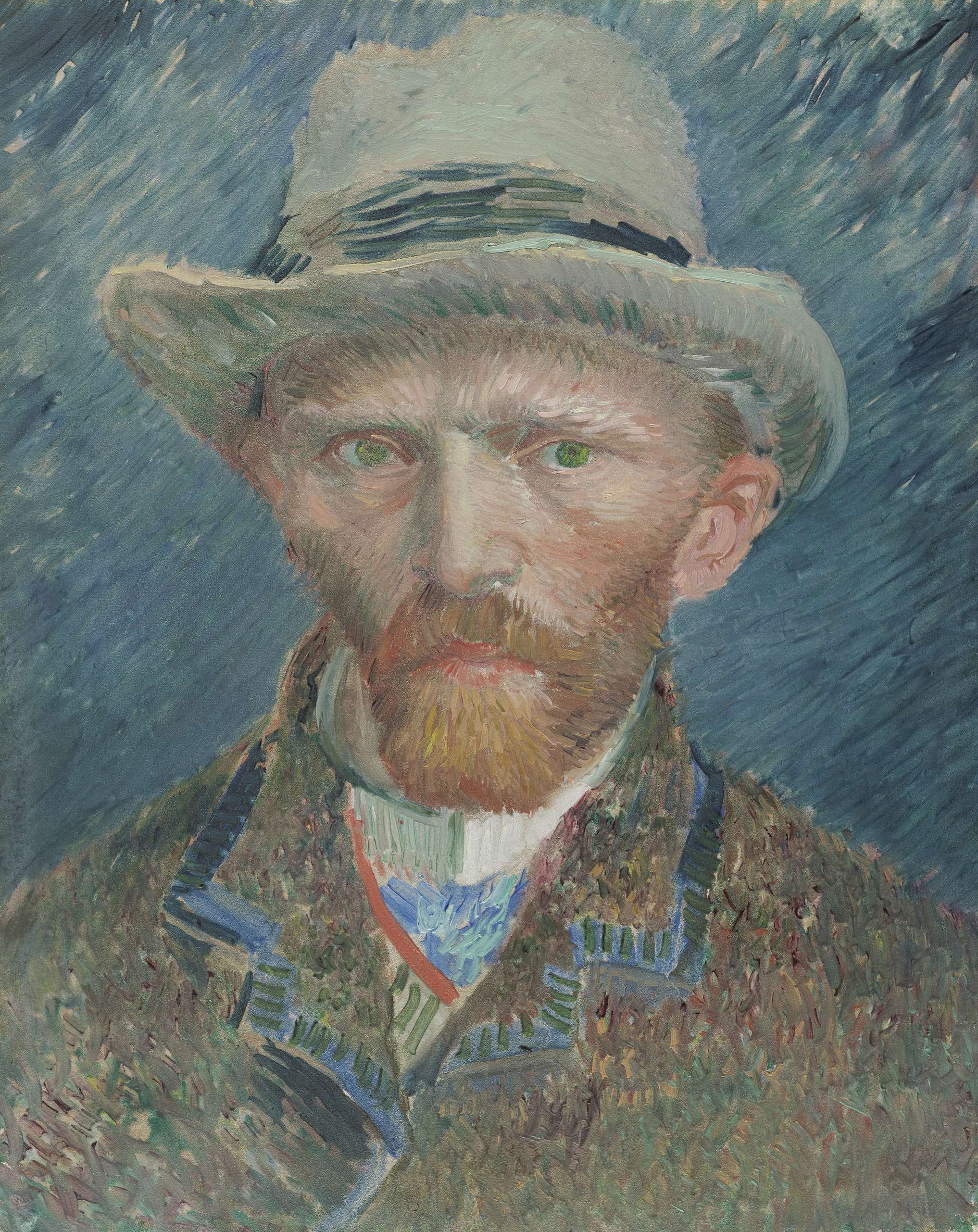
Truth be told we are much more like van Gogh than we care to admit. Idealistic, anxious, frustrated, and misunderstood.
But honestly, when you think of individuals (real or imagined) with boat loads of talent who comes to mind? Spock or van Gogh? The tragedy of the talented?

We fancy ourselves as uber-logical like Spock and uber-analytical like Data from Start Trek and Star Trek TNG respectively (we also revel in a little nerdification mixed in for good measure).
Truth be told we are much more like van Gogh than we care to admit. Idealistic, anxious, frustrated, and misunderstood.
But honestly, when you think of individuals (real or imagined) with boat loads of talent who comes to mind? Spock or van Gogh? The tragedy of the talented?

Oct 29, 2010
Favorite Workplace Quote
I heard a quote from a friend of mine the other day. Not sure who originated it. Maybe his boss, maybe it's someone famous and this is a well known one.
Besides being hilarious maxim it's an organizational imperative that no matter who fucked it up, in the end, it has to be fucked back down.
They keep fuckin' it up, so we have to fuck it back down
Besides being hilarious maxim it's an organizational imperative that no matter who fucked it up, in the end, it has to be fucked back down.
Subscribe to:
Posts (Atom)